
Wasp & Bee Control in Liberal, KS, Southwest Kansas, Guymon, OK & the Oklahoma Panhandle
Wasp Control Services in Liberal, KS, Southwest Kansas, Guymon, OK & the Oklahoma Panhandle
Wasp control in Liberal, KS, Southwest Kansas, Guymon, OK & the Oklahoma Panhandle focuses on the safe management of stinging insect activity around residential, commercial, and outdoor structures where nests may form in protected areas such as rooflines, wall voids, trees, and utility structures. Davis Pest Control provides structured wasp control services throughout Liberal, KS, Guymon, OK and nearby Oklahoma areas where warm weather and open outdoor spaces create favorable nesting conditions.
Stinging insects become most active during warmer months when colonies grow rapidly and nesting sites expand. Their presence near homes and businesses can increase the risk of stings, especially in areas with frequent human activity.
Wasp Activity Around Structures in Liberal, KS, Southwest Kansas, Guymon, OK & the Oklahoma Panhandle
Wasp activity in Liberal, KS, Guymon, OK and surrounding Oklahoma areas is commonly associated with seasonal nesting behavior and access to sheltered construction spaces.
Nest Building in Structural Gaps
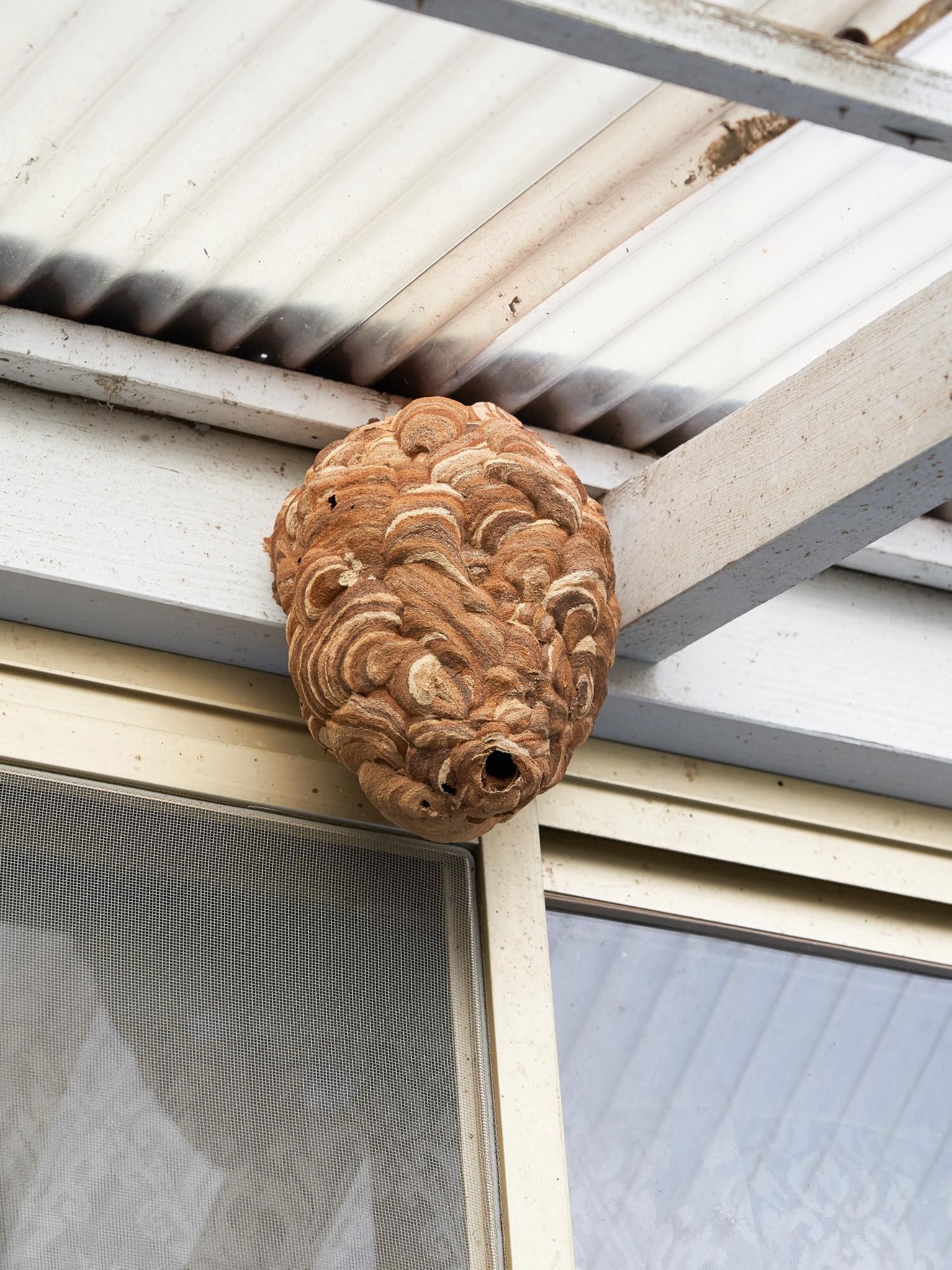
Wasps frequently build nests under eaves, inside wall voids, attics, and porch ceilings. These protected areas allow colonies to expand while remaining hidden from direct disturbance.
Outdoor Nesting in Trees and Vegetation
Some wasp species may establish nests in trees, shrubs, or dense vegetation. These locations provide natural protection and proximity to food sources such as nectar and insects.
Increased Activity Near Food and Water Sources
Stinging insects are often attracted to outdoor food areas, trash bins, and standing water sources. This activity is commonly observed around patios, outdoor dining spaces, and building entrances.
Wasp Inspection and Nest Identification
Inspection for wasp control focuses on locating active nests, identifying species behavior, and assessing structural access points.
Exterior Structure Inspection
Exterior inspection includes rooflines, gutters, siding edges, and eaves where nests are commonly attached. These areas are carefully checked for visible nest formation and insect movement.
Interior Void and Entry Point Evaluation
In cases where nests are hidden inside walls or ceilings, inspection focuses on entry points where insects may be entering or exiting the structure. These signs often indicate concealed nesting activity.
Vegetation and Landscape Assessment
Trees, bushes, and yard structures are evaluated for hidden or elevated nests. These areas are often overlooked but can support significant colony development.
Wasp Treatment Methods and Nest Removal
Treatment for wasps involves addressing active nests and reducing conditions that support continued nesting activity around structures.
Targeted Nest Treatment Applications
Indoor inspection focuses on carpets, furniture, pet bedding, and low-traffic areas where fleas may develop or hide. Signs such as biting activity and small insect presence are evaluated.
Exterior Structure Treatment Zones
Exterior treatments are applied to common nesting areas such as eaves, roof edges, porch ceilings, and window frames. These applications help reduce re-nesting in high-risk areas.
Entry Point and Void Treatment Focus
Pet movement patterns and potential wildlife access points are reviewed as part of the inspection process. These factors often contribute to the introduction and spread of fleas and ticks.
Wasp Behavior and Seasonal Patterns
Wasp activity is strongly influenced by seasonal conditions and colony development cycles in Liberal, KS, Guymon, OK and nearby Oklahoma regions.
Colony Expansion During Warm Months
Stinging insect colonies grow rapidly during spring and summer when temperatures support reproduction and foraging activity. This period typically sees the highest level of nest development.
Defensive Behavior Near Nests
Wasps and bees become more defensive as colonies grow. Increased activity near nests often occurs when the colony perceives nearby movement or disturbance.
Late-Season Aggression and Activity Changes
In late summer and early fall, wasp activity can increase around food sources as natural resources decline. This often leads to more frequent encounters around outdoor spaces.
Monitoring and Ongoing Stinging Insect Management
Wasp control may require ongoing monitoring due to their ability to rebuild nests in the same or nearby locations.
Reoccurring Nest Site Checks
Previously treated areas are monitored for new nest development or returning insect activity. This helps identify recurring nesting locations around structures.
Seasonal Nesting Activity Tracking
Stinging insect activity is tracked throughout warmer months when colony formation is most active. This helps anticipate and address new nest formation early.
Structural and Environmental Condition Review
Building structure and surrounding landscape conditions are reviewed to identify areas that may continue to attract nesting activity, such as sheltered overhangs or protected corners.
Wasp Control Coverage in Liberal, KS, Southwest Kansas, Guymon, OK & the Oklahoma Panhandle
Davis Pest Control provides wasp control services throughout Liberal, Kansas, Guymon, OK and surrounding Oklahoma communities, including residential homes, commercial buildings, and outdoor environments where stinging insect nests are commonly found.
Each service is based on inspection findings and nest location. Treatment strategies are adjusted according to colony size, nesting position, and accessibility within or around the structure.
Wasp and bee control services in Liberal, KS, Guymon, OK and nearby Oklahoma areas focus on identifying active nests, managing stinging insect populations, and addressing structural areas that support repeated nesting activity.